In lipid nanoparticle (LNP) research and development, PEG-lipid is often used at a relatively low molar percentage compared with other lipid components. However, its influence on particle stability, surface properties, circulation behavior, and delivery performance can be significant. Even small differences in PEG-lipid structure, purity, molecular weight distribution, or degradation profile may affect formulation reproducibility.
So, how should researchers evaluate PEG-lipid quality for LNP development? The answer goes beyond checking a purity percentage on a Certificate of Analysis (CoA). A reliable evaluation should confirm molecular identity, PEG molecular weight characteristics, lipid anchor structure, functional group integrity, impurity levels, storage stability, and performance after incorporation into the LNP formulation.
For research teams developing mRNA, siRNA, and other nucleic acid delivery systems, this article explains the key PEG-lipid quality attributes, analytical methods, documentation requirements, and practical evaluation steps. It also discusses how different PEG-lipid structures, including DSPE-PEG and DMG-PEG, can influence formulation development.
What Determines the Quality of a PEG-Lipid for LNP Research?
PEG-lipid quality is determined by several connected characteristics rather than a single analytical result. A material may show a high reported purity but still require further evaluation if its molecular identity, PEG chain distribution, terminal functionality, or degradation profile is not adequately characterized.
For LNP research, the main quality attributes to consider include:
- Molecular identity: The lipid anchor, PEG chain, linker, and terminal group should match the intended chemical structure.
- Chemical purity: The material should meet an agreed specification for the target PEG-lipid and relevant related substances.
- PEG molecular weight distribution: The average molecular weight and distribution should be consistent with the product specification.
- Functional group integrity: Reactive groups such as maleimide, NHS, amine, or azide should retain the required chemical functionality.
- Residual impurities: Relevant residual solvents, unreacted starting materials, free PEG, free lipid, and process-related impurities should be controlled.
- Stability: The material should maintain its specified properties during storage and handling.
- Batch consistency: Different production batches should show comparable quality attributes within agreed limits.
These attributes are particularly important when a research program moves from initial formulation screening to repeated experiments, scale-up, or more advanced development stages. A consistent starting material makes it easier to understand whether changes in LNP performance are caused by formulation variables or differences in the raw material.
Researchers can begin by reviewing the available PEGylated lipid product range and identifying the anchor structure, molecular weight, and terminal functionality that match their formulation objectives.
Confirm Molecular Identity and Structural Consistency
The first question is whether the supplied material is actually the PEG-lipid specified for the project. PEG-lipids contain multiple structural regions, and each one can affect the final molecule's chemical behavior.
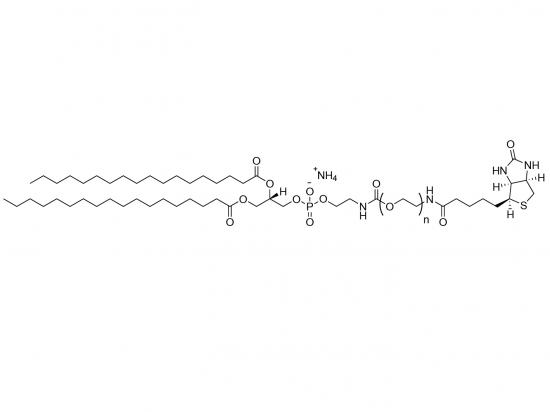
A typical PEG-lipid consists of three main parts:
- Hydrophobic lipid anchor: Helps associate the PEG-lipid with the lipid phase of the nanoparticle.
- PEG chain: Forms a hydrophilic surface layer that influences particle interactions with the surrounding environment.
- Terminal group or linker: Determines whether the PEG end is non-reactive or available for further chemical modification.
Analytical characterization should confirm that these structural elements are consistent with the product specification. Depending on the molecule and development requirements, researchers may use complementary techniques such as:
- ¹H NMR and other appropriate NMR methods: Support structural confirmation and provide information about PEG and lipid-related signals.
- Mass spectrometry: Helps assess molecular mass and investigate structural or composition-related differences.
- HPLC with suitable detection: Can help evaluate chemical composition and related substances when the method is appropriate for the PEG-lipid.
- FTIR: May provide supporting information about characteristic functional groups.
No single method necessarily confirms every structural feature. For PEG-containing materials, a combination of analytical techniques is often more informative than relying on one chromatogram or one mass result.
For example, a researcher evaluating a DSPE-based PEG-lipid should confirm the expected distearoyl anchor and PEG structure. If the product contains a reactive terminal group, the analysis should also address whether that group is present and chemically suitable for the intended application.

Evaluate Chemical Purity and Related Impurities
Purity is one of the most frequently reviewed PEG-lipid specifications, but researchers should understand how the reported value was obtained and what it actually represents.
PEG-lipids are polymer-conjugated molecules. Their analytical profiles can be more complex than those of small molecules with a single, sharply defined molecular structure. Depending on the PEG-lipid, the analytical method, detector, sample preparation, and calculation approach can influence the reported result.
When reviewing a PEG-lipid CoA, consider the following information:
| Quality Attribute | What to Check | Possible Analytical Approach |
|---|---|---|
| Chemical purity | Main component and related substances | Suitable HPLC method, with appropriate detection |
| Molecular identity | Expected lipid anchor, PEG chain, and terminal group | NMR and mass spectrometry |
| PEG distribution | Average molecular weight and distribution profile | SEC/GPC or other suitable methods |
| Residual solvents | Solvents relevant to the manufacturing process | Gas chromatography where appropriate |
| Water content | Moisture level against the product specification | Karl Fischer titration |
| Degradation products | Oxidation, hydrolysis, or other relevant degradation | Stability-indicating chromatography and mass spectrometry |
Potential impurities depend on the synthetic route and chemical structure. They may include unreacted PEG, unreacted lipid intermediates, incompletely conjugated species, residual reagents, and degradation products.
For this reason, a purity value should always be interpreted together with the analytical method, specification, and relevant impurity profile. A result of 98% from one method should not automatically be considered equivalent to a 98% result obtained using a different method or calculation approach.
Check PEG Molecular Weight and Distribution
PEG molecular weight is an important design parameter because it influences the size and properties of the hydrophilic surface layer on LNPs. However, the nominal PEG molecular weight alone does not provide a complete description of the material.
Researchers should distinguish between:
- Nominal molecular weight: The molecular weight grade specified for the PEG chain, such as 2000 Da.
- Number-average molecular weight (Mn): The average molecular weight calculated based on the number of polymer molecules.
- Weight-average molecular weight (Mw): A molecular weight average that gives greater weight to larger polymer chains.
- Dispersity (Đ): The ratio of Mw to Mn, describing the breadth of the molecular weight distribution.
For polydisperse PEG-lipids, a nominal designation such as PEG 2000 does not mean that every PEG chain has exactly the same molecular weight. The distribution profile and the method used to characterize it should be considered when comparing different suppliers or batches.
SEC/GPC can provide useful information about molecular weight distribution when the method is suitable for the material. The interpretation should account for calibration standards, solvent conditions, and the behavior of the PEG-lipid being tested.
When comparing two PEG-lipid batches, researchers should not focus only on whether both are labeled PEG 2000. They should also review the relevant molecular weight data and determine whether the distribution is consistent with the established specification.
Verify the Lipid Anchor and PEG Shedding Characteristics
The lipid anchor influences how a PEG-lipid associates with the lipid nanoparticle and how readily it may leave the particle surface over time. This behavior is commonly discussed as PEG shedding or PEG-lipid desorption.
Two commonly evaluated structures are DSPE-PEG and DMG-PEG. Although both contain PEG chains, their hydrophobic anchors are different.
| Comparison Factor | DSPE-PEG | DMG-PEG |
|---|---|---|
| Anchor structure | Distearoyl phosphatidylethanolamine-based anchor | Dimyristoyl glycerol-based anchor |
| Fatty acyl chains | Two C18 chains | Two C14 chains |
| General anchoring tendency | Often shows stronger association with lipid assemblies | Often evaluated for more readily shed PEG coverage |
| Research consideration | PEG retention and persistent surface coverage | PEG shedding and surface remodeling |
These are general structural tendencies, not fixed performance guarantees. PEG molecular weight, lipid composition, molar percentage, formulation method, and biological environment can all influence the actual behavior of the PEG-lipid.
For example, a longer lipid anchor may help maintain PEG coverage, but stronger retention is not automatically better for every LNP application. Excessive or persistent PEG coverage may interfere with interactions required for cellular uptake or delivery. The appropriate balance depends on the intended research objective.
Researchers evaluating a longer-chain phospholipid-based option can review SinoPEG's DSPE-PEG-OH, which is listed in 2000 Da, 3400 Da, and 5000 Da molecular weight options. For a DMG-based comparison, mPEG-DMG provides another structural option for LNP research.
Assess Terminal Functional Group Integrity
Not all PEG-lipids are designed only to provide a hydrophilic surface layer. Some contain reactive terminal groups for ligand attachment, surface modification, or other conjugation strategies.
Common functional groups include:
- Maleimide (MAL): Used in compatible conjugation reactions with thiol-containing molecules.
- NHS: Can react with primary amines under suitable reaction conditions.
- Amine (NH2): Provides an amino group for selected coupling reactions.
- Carboxyl (COOH): Can be used in suitable activation and coupling workflows.
- Azide (N3): Can participate in compatible click-chemistry reactions.
- Hydroxyl (OH): Provides a non-activated hydroxyl terminus for applications where that functionality is required.
For functionalized PEG-lipids, researchers should evaluate more than the total chemical purity. The proportion of molecules retaining the intended reactive group can be especially important.
For example, a maleimide-functionalized PEG-lipid may show an acceptable overall purity result while still requiring a separate assessment of maleimide functionality. Hydrolysis or other chemical changes can reduce the availability of reactive groups even when the main molecular structure remains detectable.
Depending on the functional group, appropriate evaluation may include NMR, chromatographic methods, mass spectrometry, and a suitable functional group assay or conjugation test.
For projects that require an NHS-functionalized lipid anchor, researchers can also examine DMG-PEG-NHS and review its molecular weight options and product-specific requirements before starting conjugation studies.
Evaluate Storage Stability and Handling Requirements
PEG-lipid quality should be considered not only at the time of manufacture but also throughout storage, transportation, and laboratory handling. A material that meets its release specification may change if it is exposed to unsuitable temperatures, moisture, light, or repeated handling conditions.
Potential stability concerns include:
- Hydrolysis: Certain lipid-linker structures may be susceptible to hydrolysis under specific conditions.
- Oxidation: Oxidative changes may affect susceptible lipid structures and generate related substances.
- Moisture exposure: Water content can be relevant to material stability and reactive functional groups.
- Temperature variation: Uncontrolled storage or repeated temperature changes may affect product quality.
- Repeated opening: Frequent exposure to air and moisture may increase handling-related risks.
Researchers should follow the storage instructions for the specific PEG-lipid rather than applying one general condition to every product. For example, SinoPEG's listed PEGylated lipid products commonly specify storage at -20 ± 5°C and keeping the material dry. The exact product label and current product documentation should always take priority.
For longer development programs, it is useful to establish a material handling procedure that records the date of receipt, storage conditions, opening dates, aliquoting history where applicable, and retest or expiry information.
Connect Raw Material Quality with Final LNP Performance
A PEG-lipid can meet its chemical specification and still produce different results across LNP formulations. This is why raw material characterization should be followed by formulation-level evaluation.
Researchers should consider the following LNP quality attributes after incorporating the PEG-lipid:
- Particle size: Determine whether the PEG-lipid changes the average hydrodynamic diameter.
- Polydispersity index (PDI): Evaluate the particle size distribution and formulation uniformity.
- Zeta potential: Assess changes in the apparent surface charge under defined measurement conditions.
- Encapsulation efficiency: Determine how effectively the LNP incorporates the intended nucleic acid cargo.
- PEG-lipid retention: Measure how much PEG-lipid remains associated with the particles over the relevant time period.
- Storage stability: Monitor changes in particle size, PDI, encapsulation, and other relevant parameters.
- Functional delivery: Evaluate transfection, gene silencing, or another application-specific biological endpoint.
A useful screening strategy is to change one PEG-lipid variable at a time while keeping the other formulation components and processing conditions consistent. For example, researchers can compare two anchor structures while maintaining the same ionizable lipid, helper phospholipid, cholesterol, nucleic acid payload, and target PEG-lipid molar percentage.
This approach makes it easier to determine whether a change in LNP performance is associated with the PEG-lipid structure rather than several simultaneous formulation changes.
It is also important to test PEG-lipid behavior under conditions relevant to the intended application. Results from a simple buffer stability test may not fully predict PEG shedding or surface changes in serum-containing environments.
Review the Certificate of Analysis and Supplier Documentation
A Certificate of Analysis is an important starting point for raw material qualification. However, researchers should review the actual test information instead of relying only on a product name and a final purity percentage.
A useful PEG-lipid CoA should provide, where applicable:
- Product name, chemical identity, and product or batch number.
- Specified molecular weight or PEG grade.
- Appearance and relevant physical properties.
- Purity result and the analytical method used.
- Structural identity test results.
- Relevant impurity or residual solvent results.
- Water content or other product-specific quality attributes.
- Manufacturing or testing date and retest or expiry information.
- Storage conditions and handling instructions.
For functionalized PEG-lipids, the documentation should also address the relevant terminal group or functional group specification when it is critical to the intended use.
Researchers should check whether the test methods and acceptance criteria are consistent between batches. If a supplier changes the analytical method, the results may not be directly comparable without an appropriate method comparison.
For research programs that may progress toward pharmaceutical development, it is also useful to understand the supplier's quality management system, change control, traceability, and ability to provide supporting documentation. The level of documentation should be appropriate to the development stage and intended use of the material.
How to Build a Practical PEG-Lipid Quality Evaluation Workflow
For an LNP research team, the most efficient approach is to establish a repeatable evaluation process before comparing multiple PEG-lipid suppliers or batches.
| Evaluation Stage | Main Question | Expected Output |
|---|---|---|
| Material selection | Does the anchor and PEG structure fit the research objective? | Defined material specification |
| Identity confirmation | Does the material match the expected molecular structure? | Structural characterization results |
| Purity assessment | Are relevant impurities within the agreed limits? | Analytical purity and impurity profile |
| Molecular weight evaluation | Is the PEG distribution consistent with the specification? | Molecular weight distribution data |
| Stability review | Can the material maintain quality under defined storage conditions? | Stability and handling information |
| LNP screening | Does the PEG-lipid support the intended formulation performance? | Particle characterization and functional data |
| Batch comparison | Are different batches sufficiently consistent? | Comparable batch evaluation records |
This workflow helps separate raw material qualification from formulation optimization. It also gives researchers a clearer basis for comparing suppliers and deciding whether a PEG-lipid is suitable for continued development.
How SinoPEG Supports PEG-Lipid Selection for LNP Development
SINOPEG is a biotechnology company focused on polyethylene glycol derivatives, lipid products, drug delivery systems, and related materials. Its product portfolio includes PEGylated lipids and other lipid components used in nucleic acid delivery research.
For PEG-lipid selection, the company's catalog includes different lipid anchors, PEG molecular weight options, and terminal functionalities. Examples include DSPE-based PEG-lipids, DMG-based PEG-lipids, and functionalized PEG-lipids designed for specific conjugation requirements.
These options allow research teams to compare materials according to their formulation objectives rather than treating all PEG-lipids as interchangeable. The appropriate choice should still be confirmed through product specifications, analytical documentation, and application-specific LNP testing.
SINOPEG also provides PEG chemistry and analytical chemistry capabilities, including PEG-related characterization and impurity profiling services. For projects that require a particular molecular weight, functional group, or customized PEG-lipid structure, researchers can discuss the technical requirements with the company.
When evaluating a potential supplier, it is useful to clarify the intended application, required PEG molecular weight, lipid anchor, terminal group, batch size, analytical documentation, and storage requirements before ordering. These details help establish whether the material is suitable for the current research stage and future development needs.
Frequently Asked Questions About PEG-Lipid Quality for LNP Research
What are the most important quality attributes of PEG-lipids for LNP research?
The main attributes include molecular identity, chemical purity, PEG molecular weight distribution, lipid anchor structure, terminal group integrity, residual impurities, storage stability, and batch consistency. Researchers should also evaluate the PEG-lipid after incorporation into the intended LNP formulation.
Is a PEG-lipid purity of 98% sufficient for LNP formulation?
Not necessarily. A 98% purity result should be interpreted together with the analytical method, impurity profile, product specification, and intended application. Researchers should also confirm molecular identity, PEG distribution, and other relevant quality attributes before deciding whether the material is suitable.
How can researchers verify the molecular identity of a PEG-lipid?
Researchers can use complementary analytical methods such as NMR, mass spectrometry, and suitable chromatographic techniques. The methods should be selected according to the PEG-lipid structure and should provide evidence for the lipid anchor, PEG chain, and terminal functionality where relevant.
Why is PEG molecular weight distribution important in LNP development?
PEG molecular weight affects the hydrophilic surface layer and may influence LNP properties and biological interactions. The nominal PEG molecular weight does not describe the full distribution, so researchers should review relevant Mn, Mw, and dispersity data when these attributes are specified or important to the study.
What is the difference between DSPE-PEG and DMG-PEG?
DSPE-PEG contains a distearoyl phosphatidylethanolamine anchor with two C18 chains, while DMG-PEG contains a dimyristoyl glycerol anchor with two C14 chains. DSPE-based structures generally show stronger association with lipid assemblies, while DMG-based structures are often evaluated for more rapid PEG shedding. Actual behavior depends on the complete LNP formulation and test conditions.
How can PEG-lipid impurities affect LNP research?
Relevant impurities may affect material consistency, chemical stability, reactive group availability, or formulation reproducibility. The potential impact depends on the identity and amount of the impurity, so researchers should review the impurity profile and assess relevant risks rather than relying on a single overall purity value.
How should PEG-lipids be stored for research use?
Storage requirements depend on the specific PEG-lipid structure and supplier specification. Some PEGylated lipids are listed for storage at -20 ± 5°C under dry conditions. Researchers should follow the current product label, protect the material from unsuitable environmental exposure, and avoid repeated handling conditions that may affect stability.
Does a high-quality PEG-lipid guarantee good LNP performance?
No. Raw material quality is necessary for reproducible formulation development, but it does not guarantee a specific LNP particle size, encapsulation efficiency, stability, or delivery outcome. Researchers should perform formulation-specific characterization and functional testing under controlled conditions.
Which tests should be performed after incorporating PEG-lipid into an LNP?
Common evaluation parameters include particle size, PDI, zeta potential, encapsulation efficiency, storage stability, PEG-lipid retention, and application-specific functional delivery assays. The exact test panel should be determined by the research objective and development stage.
Scientific References
The following publications provide scientific background on PEG-lipid characterization, PEG-lipid anchor structure, LNP performance, and quality evaluation. They are included as supporting references for research discussion and should not be interpreted as product-specific test specifications.
- Strategies to Ensure the Purity of PEGylated Lipids in Lipid Nanoparticles. Cayman Chemical. 2025.
- Borah A, Giacobbo V, Binici B, Baillie R, Perrie Y. From in vitro to in vivo: The Dominant role of PEG-Lipids in LNP performance. European Journal of Pharmaceutics and Biopharmaceutics. 2025;212:114726. DOI: 10.1016/j.ejpb.2025.114726.
- The Impact of Polyethylene Glycol Lipid Anchors on the Physicochemical Properties, Protein Corona, Function, and Biodistribution of Lipid Nanoparticles. ACS Nano. 2026;20(12):9875–9890. DOI: 10.1021/acsnano.5c19757.
- European Medicines Agency. Draft Guideline on Quality Aspects of mRNA Vaccines. 2024.
These references provide general scientific and regulatory context. The appropriate acceptance criteria for a specific PEG-lipid should be established using its chemical structure, intended application, validated analytical methods, and development requirements.