Neither option wins universally. The choice between hydroxyl-terminated PEG-lipids vs conventional PEG-lipids depends on the application. Researchers should weigh four criteria: technical performance, application fit, regulatory compliance, and cost.
Hydroxyl-terminated PEG-lipids, often called HO-PEG lipids, carry a reactive hydroxyl handle. The methoxy-terminated type ends in an inert cap. Both serve as PEG-lipid conjugates in drug delivery systems and LNPs.
The distinction matters early. It shapes conjugation routes, formulation design, and sourcing decisions. This comparison works through each criterion in turn. It shows where each variant excels. Readers can build a decision framework for their own pegylation projects. A clear baseline helps teams compare suppliers on equal terms.
Key Takeaways
- Choose hydroxyl-terminated PEG-lipids when you need a reactive handle for attaching molecules.
- Choose conventional PEG-lipids when you need a stable, inert stealth coating.
- Hydroxyl-terminated PEG-lipids may reduce immune responses in repeat-dose studies.
- Conventional PEG-lipids have more regulatory precedent and may speed up approval.
- Consider cost and supplier availability for both variants before making a final decision.
Technical Performance: Hydroxyl-Terminated PEG-Lipids vs Conventional PEG-Lipids
Reactivity and Functionalization
The terminal group defines what a researcher can do with the molecule after purchase. Hydroxyl-terminated PEG-lipids carry terminal hydroxyl groups that serve as a ready conjugation handle. Ligands, fluorophores, targeting moieties, and diagnostic payloads can attach through this reactive site. Conventional PEG lipids end in a methoxy cap instead. That cap is inert by design, so the molecule functions as a finished stealth coating rather than a starting point for chemistry.
This difference drives the functionalization route. A team that needs a reactive handle selects hydroxyl-terminated PEGs and builds the conjugate in-house. A team that needs a passive surface layer selects the methoxy-terminated PEG and skips the conjugation step entirely. Neither route is superior. The synthetic plan decides which lipid PEG fits. Researchers can compare available PEGylated lipid products according to their terminal groups and intended formulation needs.
Stability and PEGylation Efficiency
PEG architecture shapes performance as much as the end group does. Branched PEG materials carry greater steric volume than linear chains. They produce a larger hydrodynamic impact at comparable mass. Y-shaped and multi-branched structures create stronger shielding around payloads, which supports half-life extension and reduced proteolysis.
Branched PEG-lipid conjugates confer higher stealth properties to LNPs than linear PEGs, indicating that PEG architecture (branched vs linear) directly influences stealth behavior.
Anchor strength matters too. Strongly anchored PEG lipids hold the surface stable across nanoparticle morphologies. Weakly anchored ones shed from the bilayer, and that shedding reshapes biodistribution. The table below summarizes how these mechanisms translate into in vivo behavior.
| Mechanism of PEG-lipid action | Effect on LNP biodistribution |
|---|---|
| Anchors PEG molecules to alkyl chains within the LNP layer | Enables stable surface modification that governs in vivo behavior |
| Prevents opsonization by serum proteins and reticuloendothelial clearance | Improves biodistribution by reducing immune recognition and clearance |
| Modifies particle size and surface charge via steric hindrance | Enhances surface characteristics and restricts surface access, shaping distribution |
| Prevents adsorption of blood plasma proteins | Extends circulation time in blood |
| Reduces tendency to aggregate | Improves colloidal stability and consistent biodistribution |
| Forms complexes with serum proteins such as ApoE | Enables receptor-mediated cellular uptake |
| Blocks steric and electrostatic interactions with endosomal membranes | Prevents endosomal escape (affects intracellular fate) |
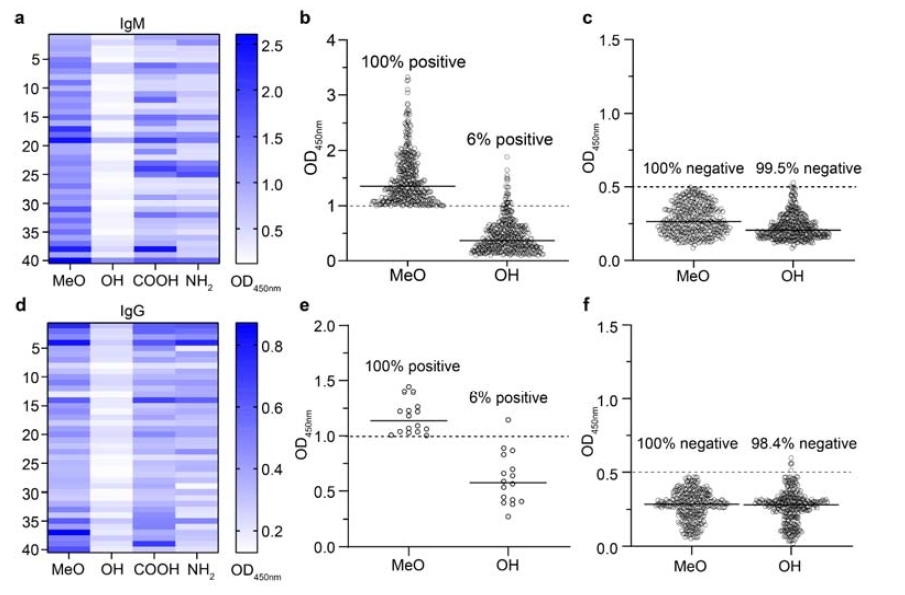
Immunogenicity data add a further dimension to PEGylation decisions. Among PEG lipids with free COOH, OH, NH2, and MeOH termini, all formed similar particle sizes near 100 nm PSD. All induced anti-PEG immunoglobulin production except the OH-PEG variant. Hydroxy PEG-LNPs achieved over 90% reduction in antibody binding with minimal complement activation compared with mPEG LNPs. Methoxy-terminated PEG lipids still showed the best stealth properties, with longer circulation and greater systemic bioavailability. The hydroxyl variant cleared more rapidly. Researchers weighing hydroxyl-terminated PEG-lipids vs conventional PEG-lipids should treat this as a design trade-off, not a defect. Repeated dosing studies in pegylated LNPs benefit from the lower immunogenicity of OH-PEG-LNPs. Single-dose programs that prioritize circulation time lean toward MeO-PEG-LNPs. Both patterns appear consistently in the literature on PEG in nanomedicine, and both inform rational PEGylation strategy for drug delivery.
Application Fit: LNPs, Diagnostics, and Surface Modification
Drug Delivery and Diagnostics
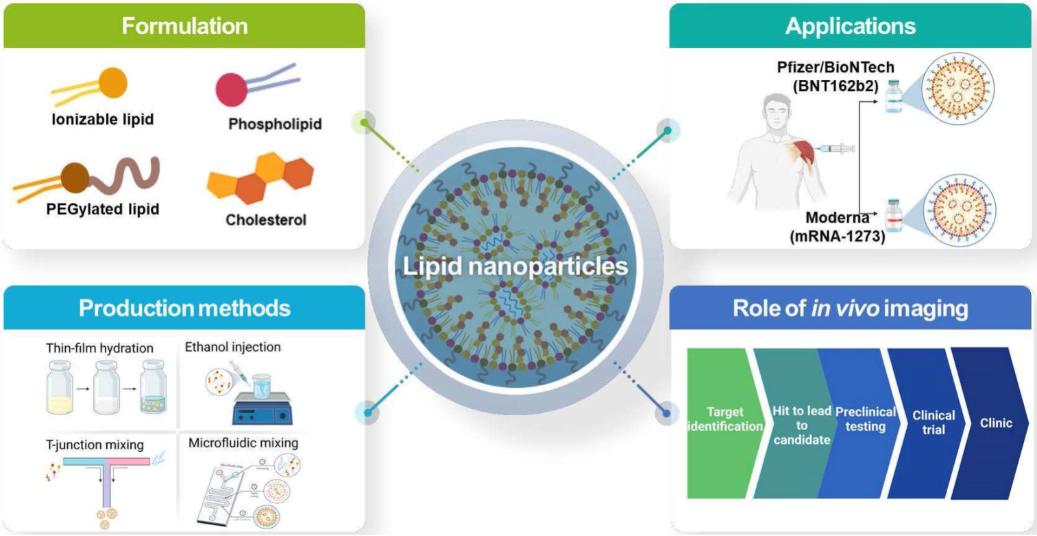
Lipid nanoparticles give the clearest test case for choosing between these two variants. Moderna's preclinical mRNA programs for inherited metabolic disorders illustrate the hydroxyl route in practice. Three candidates — mRNA-3927, mRNA-3705, and mRNA-3210 — share one LNP formulation built on the cationic lipid SM-86 and the HO-PEG lipid OL-56. Mouse models showed favorable pharmacokinetic and pharmacodynamic profiles, with elevated target protein expression and reduced disease-related metabolites. Modeling projected first-in-human doses well below the no-observed-adverse-effect level. Teams evaluating hydroxyl-terminated PEG-lipids vs conventional PEG-lipids for lipid nanoparticle delivery can treat this as a working precedent for the reactive-handle route.
Repeat dosing exposes the harder problem. A single dose of pegylated LNPs can provoke adaptive anti-PEG antibodies, and those antibodies neutralize later doses. The table below summarizes how chemistry and chain length modulate that response.
| PEG-lipid variant | Linker / PEG length | Effect on repeat-dose efficacy | Anti-PEG antibody response |
|---|---|---|---|
| PE-PEG2000 | PE linker, 2000 g/mol PEG | Efficacy loss persisted (EPO fold decrease ~3.1–4.7) | Anti-PEG IgM, total IgG, anti-PEG IgG significantly increased by day 21 |
| PE-PEG750 | PE linker, under half the MW of PEG2000 | Efficacy loss persisted, comparable to other variants | Anti-PEG IgM, total IgG, anti-PEG IgG significantly increased by day 21 |
| DMG-PEG2000 | Glycerol linker, 2000 g/mol PEG | Efficacy loss persisted, comparable to other variants | Anti-PEG IgM, total IgG, anti-PEG IgG increased; total IgM also rose (DMG only) |
Neither chain length nor linker chemistry prevented the anti-PEG antibody response or the efficacy loss. Chemistry only modulated the magnitude. LNPs that elicited antibodies also impaired later delivery of an FDA-approved MC3 formulation, which points to cross-formulation interference. Anti-PEG IgM and IgG appear to recognize the PEG backbone itself. Lowering PEG concentration reduced immunogenicity but also reduced potency. The ionizable lipid's engagement of innate immune receptors therefore drives repeat-dosing success more than the PEG side does. Pre-existing anti-PEG antibodies in patients amplify this risk, and accelerated blood clearance remains a real constraint on chronic dosing schedules.
Surface Modification and Bioconjugation
Diagnostics and bioconjugation work favors the hydroxyl handle. A reactive site accepts ligands, fluorophores, and targeting groups without a separate activation scheme. Stealth coating favors conventional PEG lipids instead. For PEG on liposomes, 5–7 mol% is reported as optimal for thermodynamically stable particles, sitting at the borderline between mushroom and brush conformations. Above roughly 10 mol%, repulsion between neighboring chains destabilizes the bilayer. Longer chains build a thicker fixed aqueous layer and extend circulation; raising PEG molecular weight from 750 to 5000 Da lifted blood levels from 16% to 28%. Mixed long and short chains outperform a single length. Post-insertion into pre-formed liposomes offers a practical route for conventional PEG lipids, though insertion efficiency falls as chain length rises. These findings from PEG in nanomedicine guide formulation choices for both variants.
Regulatory Compliance for Conventional PEG Lipids and Hydroxyl Variants
Approved Uses and Precedent
Regulatory precedent favors the methoxy-terminated route. Conventional PEG lipids such as DMG-PEG and DSPE-PEG appear in approved products and carry a long history of regulatory review. Reviewers recognize these materials, and their safety packages are well established. Hydroxyl-terminated PEG-lipids lack that depth of approved-use history. A team filing with HO-PEG lipids may need additional documentation to support the novel handle. This does not make the hydroxyl route unworkable. It means the filing strategy must anticipate extra evidence requests.
The comparison of hydroxyl-terminated peg-lipids vs conventional peg-lipids therefore extends beyond the bench. Precedent shortens review timelines for conventional peg lipids. Novel variants trade that speed for functional versatility. Teams should map their regulatory pathway before locking a formulation. For researchers comparing a methoxy-terminated option, mPEG-DSPE is one product reference to review alongside the formulation's specific quality and regulatory requirements.
Documentation and Quality Requirements
Purity control presents real challenges for pegylated lipids in LNPs. High-shear processing such as tangential flow filtration can strip PEG lipids and cholesterol selectively, and total-lipid assays miss these shifts. HPLC-CAD lipid fingerprinting offers a chromophore-independent response and quantifies all lipid components at once. Orthogonal methods — DLS, Cryo-EM, SAXS — help define critical quality attributes. Pegylation programs should also watch for PEG desorption, which lowers electrostatic repulsion and drives aggregation.
Supplier certification is a practical checkpoint. ISO 9001:2015 and ISO 13485 appear on standard qualification checklists for clinical-grade lipid materials, alongside GMP, REACH, and TSCA verification. Some manufacturers of GMP-grade PEG derivatives and lipids hold both certifications and follow ICH Q7 and China GMP guidelines. Researchers sourcing peg lipids for LNPs should request this documentation early. The same applies to hydroxyl-terminated peg-lipids, where the quality file may be thinner. Strong documentation reduces risk for any pegylation project. For functionalized candidates, the available specifications of DSPE-PEG-MAL(NH4+) provide a relevant starting point for checking molecular weight, packaging, and documentation availability.
Cost, Scalability, and Alternatives to Conventional PEG Lipids
Synthesis Cost and Scalability
Scale changes the economics of both variants. Milligram quantities for early screening carry high per-unit costs for either chemistry. Kilogram campaigns reward process maturity. Conventional peg lipids benefit from established routes and broad CDMO/CMO availability, so vendors quote competitive prices at large scale. Hydroxyl-terminated peg-lipids follow similar synthetic logic, yet fewer suppliers run them at commercial volume. Teams should confirm kilogram capacity before locking a formulation into pegylated lnps.
Supplier capability deserves a place on the evaluation sheet. SINOPEG builds laboratories and production facilities with reference to U.S. FDA cGMP standards, organizes production per ICH-Q7A, and holds 22 DMFs meeting FDA requirements. The company maintains ISO 9001 and ISO 13485 systems and offers CDMO/CMO services from milligram to kilogram scale. Its portfolio includes HO-PEG lipids, hydroxyl-terminated PEG lipids, and monodisperse HO-PEG derivatives. This profile gives researchers a neutral benchmark for comparing vendors of peg lipids.
Supply and Total Cost of Ownership
Long-term sourcing decisions now extend beyond PEG. Emerging alternatives to conventional peg lipids include polysarcosine, polyoxazolines, zwitterionic polymers, hyperbranched poly(glycerol), and hydrophilic peptide-lipids. Each offers distinct advantages, and none displaces peg lipids outright.
Next-generation stealth carriers are increasingly being designed with polyoxazolines, polyglycerols, and zwitterionic polymers, building on chemistries originally developed for conventional PEGylation; grafting strategies enable degradable, functional polymer–drug conjugates with improved therapeutic profiles and reduced immunogenicity.
Alternative Material Structural Basis Key Advantages vs. PEG-Lipids Polysarcosine (pSar) Pseudo-peptide (poly-N-methylglycine) built from natural amino acids Strong stealth behavior, biodegradable, no pre-existing human antibodies, better endosomal escape than PEG Polyoxazolines (POx) Water-soluble synthetic polymers with peptide-like backbone, highly tunable Very low immunogenicity, stable in vivo, long circulation, easy to functionalize for targeting Zwitterionic polymers (e.g., PCB, PSB) Equal positive and negative charges giving net neutrality Tight hydration layer via electrostatic interactions, ultra-low biofouling, resists protein corona Hyperbranched poly(glycerol) (HPG) Highly branched hydrophilic polyether Excellent biocompatibility, strong steric shielding from branching, good safety without ABC Hydrophilic peptide-lipids Lipids conjugated to sequence-defined amino acid chains Fully degradable, tunable surface charge, can combine stealth with receptor targeting
Total cost of ownership covers more than the invoice. It includes documentation packages, analytical method development, and repeat-dose studies for pegylated lnps. Researchers weighing hydroxyl-terminated peg-lipids vs conventional peg-lipids should price these items alongside the material itself. Both variants remain valid options, and alternatives to conventional peg lipids belong in a long-term sourcing plan as a hedge rather than a replacement. A balanced portfolio of peg lipids, backed by qualified suppliers, keeps drug delivery programs flexible.
Four criteria should guide the choice: technical performance, application fit, regulatory compliance, and cost. No single answer fits every program. The right pick depends on the application at hand.
A practical framework starts with the functional requirement. Teams needing a reactive handle lean toward hydroxyl-terminated PEG-lipids. Teams needing an inert stealth coating lean toward conventional peg lipids. Next, screen candidates against regulatory precedent, since DMG-PEG2000, DSPE-PEG2000, and the ALC-0159 family are clinically established. Then weigh cost.
Researchers should request documentation and sample data for both variants before committing. Pegylation programs benefit from holding both options, and peg lipids remain central to drug delivery work.
FAQ
Which variant should a team pick for a first formulation?
Start with the functional requirement. A reactive handle points to hydroxyl-terminated PEG-lipids. An inert stealth coating points to conventional peg lipids. Then screen candidates against regulatory precedent and cost. Both variants serve valid roles in a research portfolio.
Do hydroxyl-terminated PEG-lipids reduce immune response in lnps?
Evidence suggests they can. Among PEG lipids with free COOH, OH, NH2, and MeOH termini, only the OH-PEG variant avoided anti-PEG immunoglobulin production. Hydroxy PEG-lipids achieved over 90% reduction in antibody binding with minimal complement activation. Methoxy-terminated peg lipids still delivered longer circulation.
How do peg lipids affect repeat dosing in pegylated lnps?
A single dose can provoke anti-peg antibodies, and those antibodies neutralize later doses. Neither chain length nor linker chemistry prevented this response in the cited data. Anti-PEG IgM and IgG appear to recognize the PEG backbone itself. Accelerated blood clearance remains a real constraint on chronic schedules.
What PEG density works for stealth coating?
For PEG on liposomes, 5–7 mol% supports thermodynamically stable particles. Above roughly 10 mol%, repulsion between neighboring chains destabilizes the bilayer. Longer chains extend circulation; raising molecular weight from 750 to 5000 Da lifted blood levels from 16% to 28%. Mixed chain lengths outperform a single length.
Which documentation should researchers request from suppliers?
Request ISO 9001:2015 and ISO 13485 certificates, GMP statements, and DMF listings. Ask for HPLC-CAD lipid fingerprinting data and orthogonal methods such as DLS and Cryo-EM. For HO-PEG lipids and other PEG-lipid conjugates, confirm the quality file covers the reactive handle. Early documentation review reduces filing risk for any lipid program.